
Is Nature the Ultimate Teacher?

Exploring nature’s role in the learning process
By Harriet Leedham | 15th September 2025

Over the past few months I have been studying for my Forest School Leader qualification, a pursuit that has ignited my already deep connection with the natural world around me. I have always been in awe of how intricately connected every aspect of the environment is, and the more I learn, the more I seem to get lost down a never-ending rabbit hole of inquiry and discovery.
For a recent assignment I have been familiarising myself with the research of Stephen Kellert, a social ecologist exploring the link between child development and nature-based learning. His depiction of what I perceive as nature’s curriculum is compelling and, in my opinion, incredibly important.
Nature’s Curriculum
When I first started on this journey, my appreciation for the natural world was so strong and my only aspiration was to encourage more people to experience it. However, the further along this path I walk, the more I discover how fundamentally valuable outdoor experience is for the development of our children. Not only is it peaceful, beautiful and fun, but the ecosystem holds an enormous library of resources that engage, stimulate, and interest children, whilst having a huge positive impact on their mental, emotional, social, and physical health and wellbeing. Kellert categorises these benefits into eight nature-based values:
Attraction

Do you remember the last time you saw a sunset? Perhaps you remember the emotions you experienced, or maybe you caught yourself thinking about the parts of the world who were receiving a simultaneous sunrise. The natural world is abundant with aesthetic appeal, and, beyond just looking good, this aspect of nature nurtures a whole host of benefits. The artists among you may relate to feeling inspired to create after experiencing natural beauty. The scientists among you will attest to the curiosity-provoking natural shapes, colours, proportions, and textures that promote the development of the intellectual as well as the inventive.
Affection

As a child I used to make a lot of friends among the leaf litter, rocks, and deadwood of my environment. Annie-Rose, a beloved pet woodlouse, is permanently etched upon my memory alongside the many earthworms that my pre-school self used to collect and ‘keep safe’ in my coat pockets until my heroic mother found and rescued them on my return home. This emotional connection with the natural world remains strong in my adulthood, and, on reflection, I acutely recognise the benefits that nurturing an affection for the environment has on the emotional development of children. Bonding with other species can have a profound impact on combating loneliness and isolation, whilst also teaching empathy, nurturance, and social skills.
Aversion

I’m sure many of you have experienced the less glamorous side to interacting with nature. Perhaps this was an encounter with a winged creature whilst trying to enjoy an ice cream (wasps and seagulls, I’m looking at you), a fateful brush with a stinging nettle on a warm summer’s day, or a stranded Wellington boot pulled off by a very sticky muddy puddle. Learning how to risk-assess an environment, protect ourselves from the natural elements, and cope in challenging situations are valuable skills to all children. In a supervised setting this promotes independence, responsibility, and awareness in children, increasing their understanding and proficiency of security and safety.
Dominion

Learning to control or manage elements of nature, such as accomplishing a hike to a mountain peak, foraging edible plants, or building a forest shelter out of fallen branches, gives children the opportunity to not only develop physical fitness, but also a sense of mastery and self-confidence. Improving self-esteem is a catalyst for risk-taking, and consequently this cycle repeats itself. With this in mind, it isn’t hard to understand why people familiar with nature crave those outdoor adventures so much.
Exploitation

Although the word ‘exploitation’ often has a negative context, as you will soon see, the exploitation of nature can have some positive connotation. Using natural elements for our own material purposes is a comforting and meaningful process that humanity has woven into culture throughout history. Some of my favourites are bringing the outside in for moments of celebration (think pumpkins, Christmas trees, and a vibrant vase of flowers), eating healthy, locally sourced meals, and enhancing the physical comfort and ambience of our homes with feather pillows, house plants, and fuel-powered heating systems. The learning process of responsibly using natural resources introduces children to concepts of problem-solving, invention, and efficiency alongside building a mutual respect for their environment.
Intellect
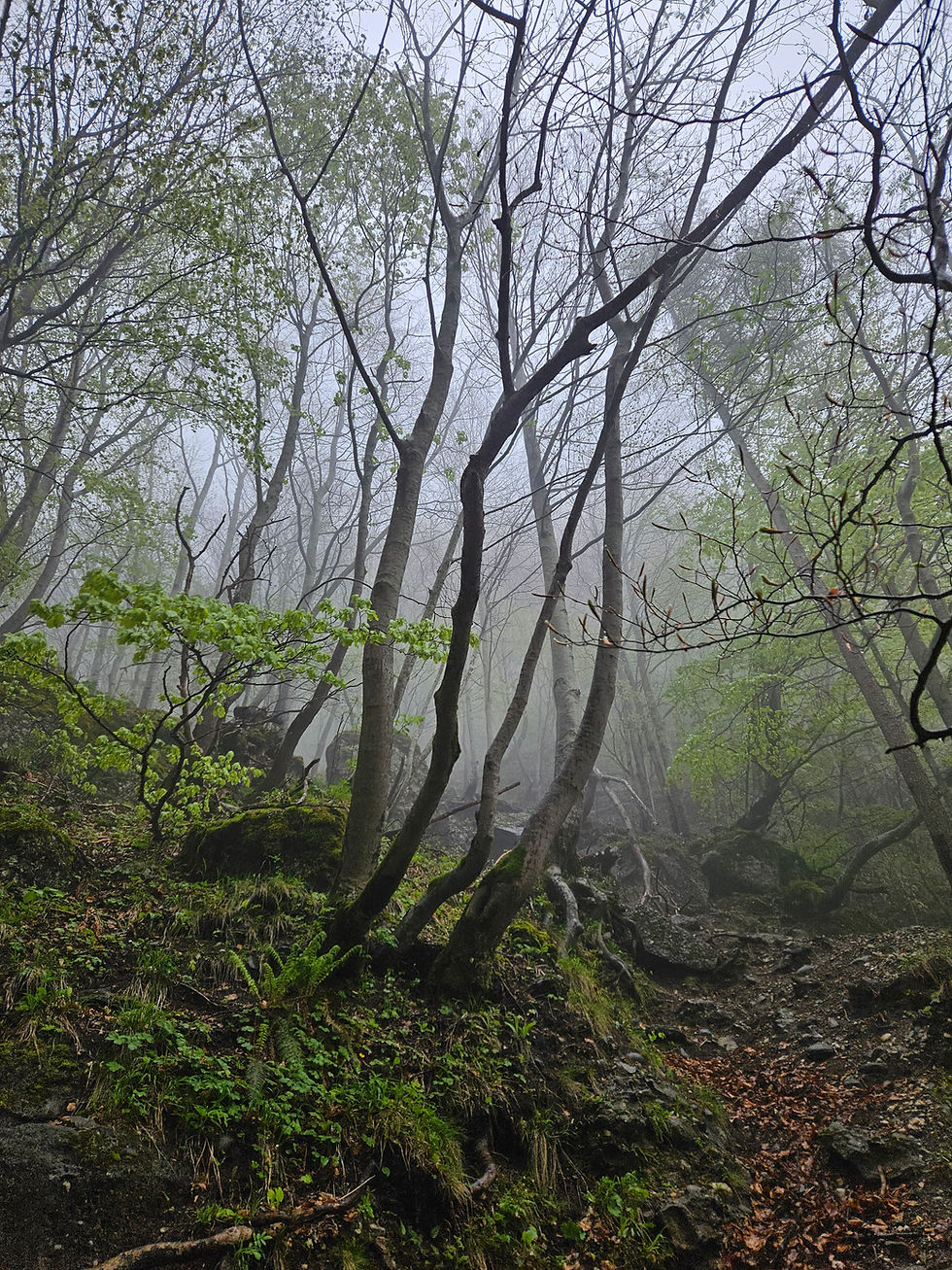
Nature is so intricately intertwined that this diverse and mysterious ecosystem provides all who encounter it with a never-ending puzzle to solve. An inspiring teacher, nature assigns challenges that spark the curiosity of its learners and encourages them to conduct their own passion-filled investigations. Cognitive skills such as critical-thinking, resilience, and analysis are learned when children interact with these environments. In fact, Kellert describes the natural world as “the most information rich and stimulating environment a child ever encounters.”3
Spirituality

As much as we try to fight it in modern society, we, as humans, are a part of nature. It is no accident, then, that many of us feel a spiritual connection or significance when spending time in the forest, hiking up mountains, or relaxing by the sea. The feeling that I am a tiny part of something that is so much bigger in size and significance than I could ever imagine fills me with equal parts awe and fear, inspiration and direction, hope and peace. My morning walks often quickly turn into sessions of deep reflection, giving me space to untangle thoughts and process emotions. I know that I am not alone in turning a brisk walk or leisurely stroll into a non-negotiable part of each and every day.
Symbolism

Do you ever wonder where language comes from? What inspired early humans to develop communication strategies with one another? Kellert suggests that it is rooted in our instinct to recognise patterns and distinctions in nature. I associate this mostly with art pieces which detail or use natural objects, natural imagery which verbally illustrates a story or set of directions, and folk instruments that have been created from natural resources with the intention of mimicking elements of the earth’s soundscape. Experiencing symbolism in nature teaches children to create and connect ideas, concepts and processes, providing them with an essential tool for navigating the modern world.
Conclusion
Is nature the ultimate teacher? I believe so, wholeheartedly. I hope that you now have a better understanding of the many valuable lessons that nature’s curriculum offers. As a world so deeply invested in technology and urbanisation, it is my hope that we can begin to recognise the value of reconnecting our children with their biological roots. Strengthening our relationship with nature can only have a positive effect on the development of our character, skillset, sense of community and quality of life, and those of our children.
References
Kellert, S. (2004) ‘Ordinary nature: the value of exploring and restoring nature in everyday life’, Proceedings of the 4th International Symposium on Urban Wildlife Conservation, pp.9-19
Kellert, S. (2010) ‘For the love of beauty and nature’, Moral Ground, pp. 373-378
Kellert, S. & Van Wieren, G. (2013) ‘The origins of aesthetic and spiritual values in children’s experience of nature’, Journal for the Study of Religion Nature and Culture, 7(3) pp. 242-264
Kellert, S. (2014) ‘Biophilia and biomimicry: evolutionary adaptation of human versus nonhuman nature’, Intelligent Buildings International, 8(2), p.1-6


Comments